
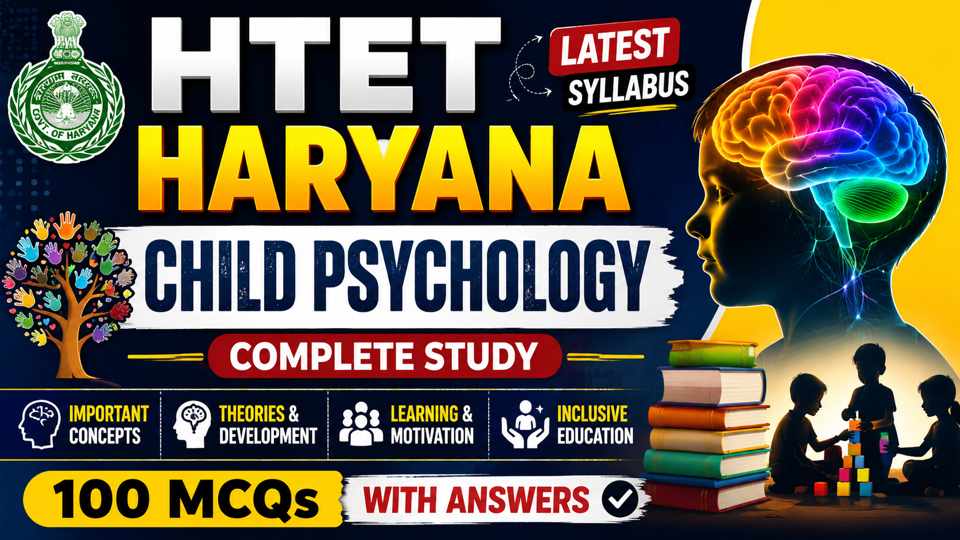
Child Psychology
Child psychology is a branch of psychology that studies the physical, mental, emotional, social, and cognitive development of children from birth to adolescence. It helps teachers and parents understand how children think, learn, behave, and react in different situations.
A child is not a miniature adult. Children develop gradually through different stages. Their thinking, emotions, language, intelligence, and social behavior change with age and experience. Understanding child psychology helps teachers create a better learning environment.
Importance of Child Psychology
Child psychology is important in education because it helps teachers understand the needs, interests, abilities, and limitations of students. A teacher who understands child psychology can teach more effectively.
It helps in:
- Understanding individual differences
- Managing classroom behavior
- Identifying learning difficulties
- Developing confidence in students
- Improving communication
- Guiding emotional and social development
Stages of Child Development
1. Infancy Stage (0–2 years)
During this stage, children learn through senses and movements. They begin to recognize people, sounds, and objects.
2. Early Childhood (2–6 years)
Children develop language skills, imagination, and curiosity. They ask many questions and enjoy playing.
3. Middle Childhood (6–12 years)
Logical thinking begins to develop. Children learn social rules, teamwork, discipline, and academic skills.
4. Adolescence (12–18 years)
This stage includes physical and emotional changes. Teenagers seek independence and develop identity.
Physical Development
Physical development includes growth in height, weight, muscles, and body coordination. Proper nutrition, exercise, sleep, and healthcare are important for healthy development.
Cognitive Development
Cognitive development refers to the growth of thinking, reasoning, memory, and problem-solving abilities.
Jean Piaget gave the theory of cognitive development. According to him:
- Children learn actively.
- Development occurs in stages.
- Thinking ability changes with age.
Emotional Development
Children experience emotions such as happiness, anger, fear, and sadness. Emotional development helps children express feelings appropriately and control emotions.
Teachers should create a supportive environment where children feel safe and respected.
Social Development
Social development means learning to interact with others. Children learn cooperation, sharing, friendship, and discipline through family, school, and society.
Play activities help social development greatly.
Intelligence
Intelligence is the ability to learn, understand, and solve problems. Every child has different intelligence levels and talents.
Howard Gardner proposed the theory of Multiple Intelligences such as:
- Linguistic intelligence
- Logical intelligence
- Musical intelligence
- Spatial intelligence
- Interpersonal intelligence
- Intrapersonal intelligence
Learning
Learning is a permanent change in behavior due to experience and practice.
Important theories of learning:
- Trial and Error Theory – Thorndike
- Classical Conditioning – Pavlov
- Operant Conditioning – Skinner
- Insight Learning – Kohler
Motivation
Motivation encourages children to learn and achieve goals.
Types of Motivation
- Intrinsic Motivation – Learning from inner interest.
- Extrinsic Motivation – Learning due to rewards or punishment.
Teachers should motivate students positively.
Attention and Interest
Attention is focusing the mind on a particular object or activity. Interest increases attention and learning.
Teachers can increase attention by:
- Using teaching aids
- Asking questions
- Conducting activities
- Relating lessons to daily life
Memory
Memory is the ability to store and recall information.
Types of memory:
- Sensory memory
- Short-term memory
- Long-term memory
Revision and practice improve memory.
Personality Development
Personality includes behavior, habits, attitudes, and emotions.
Factors affecting personality:
- Heredity
- Environment
- Family
- School
- Society
Teachers play an important role in personality development.
Role of Teacher in Child Development
A teacher should:
- Understand individual differences
- Encourage creativity
- Maintain discipline positively
- Provide equal opportunities
- Develop confidence
- Use child-centered teaching methods
Inclusive Education
Inclusive education means educating all children together, including children with disabilities.
It promotes equality, cooperation, and respect.
Conclusion
Child psychology is essential for effective teaching and learning. It helps teachers understand students better and support their complete development.
बाल मनोविज्ञान
बाल मनोविज्ञान मनोविज्ञान की वह शाखा है जो जन्म से किशोरावस्था तक बच्चों के शारीरिक, मानसिक, भावनात्मक, सामाजिक और संज्ञानात्मक विकास का अध्ययन करती है। यह शिक्षकों और अभिभावकों को यह समझने में सहायता करता है कि बच्चे कैसे सोचते हैं, सीखते हैं और व्यवहार करते हैं।
बच्चा एक छोटा वयस्क नहीं होता। उसका विकास विभिन्न चरणों में धीरे-धीरे होता है। आयु और अनुभव के साथ उसकी सोच, भाषा, बुद्धि, भावनाएँ और सामाजिक व्यवहार बदलते रहते हैं।
बाल मनोविज्ञान का महत्व
शिक्षा में बाल मनोविज्ञान का विशेष महत्व है क्योंकि इससे शिक्षक विद्यार्थियों की आवश्यकताओं, रुचियों, क्षमताओं और सीमाओं को समझ पाते हैं।
यह निम्न कार्यों में सहायता करता है:
- व्यक्तिगत भिन्नताओं को समझना
- कक्षा प्रबंधन
- सीखने की कठिनाइयों की पहचान
- आत्मविश्वास का विकास
- संचार सुधारना
- भावनात्मक और सामाजिक विकास
बाल विकास के चरण
1. शैशवावस्था (0–2 वर्ष)
इस अवस्था में बच्चे इंद्रियों और गतिविधियों के माध्यम से सीखते हैं।
2. प्रारंभिक बाल्यावस्था (2–6 वर्ष)
इस अवस्था में भाषा, कल्पना और जिज्ञासा का विकास होता है।
3. मध्य बाल्यावस्था (6–12 वर्ष)
इस अवस्था में तार्किक सोच, अनुशासन और सामाजिक नियमों का विकास होता है।
4. किशोरावस्था (12–18 वर्ष)
इस अवस्था में शारीरिक और भावनात्मक परिवर्तन होते हैं तथा स्वतंत्रता की भावना विकसित होती है।
शारीरिक विकास
शारीरिक विकास में ऊँचाई, वजन, मांसपेशियों और शरीर समन्वय का विकास शामिल है।
संज्ञानात्मक विकास
संज्ञानात्मक विकास सोच, स्मृति, तर्क और समस्या समाधान क्षमता के विकास को कहते हैं।
जीन पियाजे ने संज्ञानात्मक विकास का सिद्धांत दिया।
भावनात्मक विकास
बच्चों में खुशी, क्रोध, डर और दुःख जैसी भावनाएँ होती हैं। उचित वातावरण भावनात्मक विकास में सहायक होता है।
सामाजिक विकास
सामाजिक विकास का अर्थ दूसरों के साथ व्यवहार करना सीखना है।
बुद्धि
बुद्धि सीखने, समझने और समस्याओं को हल करने की क्षमता है।
हावर्ड गार्डनर ने बहु-बुद्धि सिद्धांत दिया।
अधिगम
अनुभव और अभ्यास के कारण व्यवहार में स्थायी परिवर्तन को अधिगम कहते हैं।
मुख्य अधिगम सिद्धांत:
- प्रयास और त्रुटि सिद्धांत – थॉर्नडाइक
- शास्त्रीय अनुबंधन – पावलॉव
- क्रियात्मक अनुबंधन – स्किनर
- अंतर्दृष्टि अधिगम – कोहलर
अभिप्रेरणा
अभिप्रेरणा बच्चों को सीखने और लक्ष्य प्राप्त करने के लिए प्रेरित करती है।
अभिप्रेरणा के प्रकार
- आंतरिक अभिप्रेरणा
- बाह्य अभिप्रेरणा
ध्यान और रुचि
ध्यान किसी वस्तु या कार्य पर मन को केंद्रित करना है। रुचि सीखने को बढ़ाती है।
स्मृति
स्मृति जानकारी को संग्रहित और याद रखने की क्षमता है।
व्यक्तित्व विकास
व्यक्तित्व में व्यवहार, आदतें, दृष्टिकोण और भावनाएँ शामिल होती हैं।
बाल विकास में शिक्षक की भूमिका
शिक्षक को:
- व्यक्तिगत भिन्नताओं को समझना चाहिए
- रचनात्मकता को बढ़ावा देना चाहिए
- सकारात्मक अनुशासन बनाए रखना चाहिए
- समान अवसर प्रदान करने चाहिए
समावेशी शिक्षा
समावेशी शिक्षा का अर्थ है सभी बच्चों को साथ पढ़ाना, चाहे वे किसी भी क्षमता के हों।
निष्कर्ष
बाल मनोविज्ञान प्रभावी शिक्षण और अधिगम के लिए अत्यंत आवश्यक है। यह शिक्षक को विद्यार्थियों को बेहतर समझने और उनके समग्र विकास में सहायता करने में मदद करता है।
PART 3 – 100 Bilingual MCQs with Answers
1. What is child psychology?
बाल मनोविज्ञान क्या है?
- A) Study of animals — पशुओं का अध्ययन
- B) Study of child behavior and development — बच्चों के व्यवहार और विकास का अध्ययन
- C) Study of machines — मशीनों का अध्ययन
- D) Study of plants — पौधों का अध्ययन
Answer: B) Study of child behavior and development — बच्चों के व्यवहार और विकास का अध्ययन
2. Who proposed the theory of cognitive development?
संज्ञानात्मक विकास का सिद्धांत किसने दिया?
- A) Skinner
- B) Piaget
- C) Pavlov
- D) Thorndike
Answer: B) Piaget — पियाजे
3. Which stage is from 0–2 years?
0–2 वर्ष की अवस्था कौन-सी है?
- A) Adolescence
- B) Infancy
- C) Adulthood
- D) Middle childhood
Answer: B) Infancy — शैशवावस्था
4. Intelligence means:
बुद्धि का अर्थ है:
- A) Sleeping ability
- B) Learning and problem-solving ability
- C) Physical strength
- D) Height growth
Answer: B) Learning and problem-solving ability — सीखने और समस्या समाधान की क्षमता
5. Trial and Error theory was given by:
प्रयास और त्रुटि सिद्धांत किसने दिया?
- A) Thorndike
- B) Kohler
- C) Pavlov
- D) Freud
Answer: A) Thorndike — थॉर्नडाइक
6. Motivation from inner interest is called:
आंतरिक रुचि से होने वाली अभिप्रेरणा कहलाती है:
- A) Extrinsic motivation
- B) Intrinsic motivation
- C) Negative motivation
- D) Forced motivation
Answer: B) Intrinsic motivation — आंतरिक अभिप्रेरणा
7. Which memory stores information for a long period?
कौन-सी स्मृति लंबे समय तक जानकारी संग्रहित करती है?
- A) Short-term memory
- B) Long-term memory
- C) Sensory memory
- D) Temporary memory
Answer: B) Long-term memory — दीर्घकालिक स्मृति
8. Inclusive education means:
समावेशी शिक्षा का अर्थ है:
- A) Separate teaching
- B) Teaching all children together
- C) Online teaching only
- D) Private teaching
Answer: B) Teaching all children together — सभी बच्चों को साथ पढ़ाना
9. Classical conditioning theory was given by:
शास्त्रीय अनुबंधन सिद्धांत किसने दिया?
- A) Skinner
- B) Pavlov
- C) Piaget
- D) Gardner
Answer: B) Pavlov — पावलॉव
10. Which factor affects personality?
व्यक्तित्व को कौन-सा कारक प्रभावित करता है?
- A) Environment
- B) Family
- C) School
- D) All of these
Answer: D) All of these — ये सभी
11. Who gave the Operant Conditioning theory?
क्रियात्मक अनुबंधन सिद्धांत किसने दिया?
- A) Pavlov
- B) Skinner
- C) Freud
- D) Piaget
Answer: B) Skinner — स्किनर
12. Which stage is called teenage?
कौन-सी अवस्था किशोरावस्था कहलाती है?
- A) Infancy
- B) Childhood
- C) Adolescence
- D) Adulthood
Answer: C) Adolescence — किशोरावस्था
13. Learning through insight was proposed by:
अंतर्दृष्टि द्वारा अधिगम किसने दिया?
- A) Kohler
- B) Skinner
- C) Watson
- D) Gardner
Answer: A) Kohler — कोहलर
14. Which intelligence relates to music?
कौन-सी बुद्धि संगीत से संबंधित है?
- A) Linguistic
- B) Musical
- C) Logical
- D) Spatial
Answer: B) Musical — संगीतीय बुद्धि
15. The process of focusing attention is called:
ध्यान केंद्रित करने की प्रक्रिया कहलाती है:
- A) Memory
- B) Attention
- C) Motivation
- D) Emotion
Answer: B) Attention — ध्यान
16. Which factor influences learning most?
सीखने को सबसे अधिक कौन प्रभावित करता है?
- A) Motivation
- B) Interest
- C) Environment
- D) All of these
Answer: D) All of these — ये सभी
17. Which memory stores information temporarily?
कौन-सी स्मृति जानकारी अस्थायी रूप से संग्रहित करती है?
- A) Long-term memory
- B) Short-term memory
- C) Permanent memory
- D) Emotional memory
Answer: B) Short-term memory — अल्पकालिक स्मृति
18. Which psychologist proposed Multiple Intelligence Theory?
बहु-बुद्धि सिद्धांत किसने दिया?
- A) Gardner
- B) Freud
- C) Thorndike
- D) Piaget
Answer: A) Gardner — गार्डनर
19. Emotional development helps children to:
भावनात्मक विकास बच्चों को क्या करने में सहायता करता है?
- A) Control emotions
- B) Fly airplanes
- C) Repair machines
- D) Lift heavy objects
Answer: A) Control emotions — भावनाओं को नियंत्रित करना
20. Which teaching method is child-centered?
कौन-सी शिक्षण विधि बाल-केंद्रित है?
- A) Lecture method
- B) Activity method
- C) Dictation method
- D) Punishment method
Answer: B) Activity method — गतिविधि विधि
21. What is intelligence?
बुद्धि क्या है?
- A) Ability to sleep
- B) Ability to solve problems
- C) Ability to run
- D) Ability to shout
Answer: B) Ability to solve problems — समस्या समाधान की क्षमता
22. Which stage develops logical thinking?
कौन-सी अवस्था में तार्किक सोच विकसित होती है?
- A) Infancy
- B) Middle childhood
- C) Old age
- D) Prenatal stage
Answer: B) Middle childhood — मध्य बाल्यावस्था
23. The environment of the classroom should be: कक्षा का वातावरण कैसा होना चाहिए?
- A) Fearful
- B) Supportive
- C) Violent
- D) Noisy
Answer: B) Supportive — सहयोगात्मक
24. Which type of motivation comes from rewards?
पुरस्कार से मिलने वाली अभिप्रेरणा कौन-सी है?
- A) Intrinsic motivation
- B) Extrinsic motivation
- C) Natural motivation
- D) Emotional motivation
Answer: B) Extrinsic motivation — बाह्य अभिप्रेरणा
25. Which factor affects personality development?
व्यक्तित्व विकास को कौन प्रभावित करता है?
- A) Heredity
- B) Environment
- C) School
- D) All of these
Answer: D) All of these — ये सभी
26. Memory helps in: स्मृति किसमें सहायता करती है?
- A) Forgetting
- B) Remembering information
- C) Sleeping
- D) Running
Answer: B) Remembering information — जानकारी याद रखने में
27. Which development includes growth in height and weight?
कौन-सा विकास ऊँचाई और वजन से संबंधित है?
- A) Emotional development
- B) Social development
- C) Physical development
- D) Moral development
Answer: C) Physical development — शारीरिक विकास
28. Piaget was associated with:
पियाजे किससे संबंधित थे?
- A) Cognitive development
- B) Moral punishment
- C) Physical training
- D) Musical theory
Answer: A) Cognitive development — संज्ञानात्मक विकास
29. Children learn social behavior through:
बच्चे सामाजिक व्यवहार कहाँ से सीखते हैं?
- A) Family
- B) School
- C) Society
- D) All of these
Answer: D) All of these — ये सभी
30. Which method improves attention in class?
कक्षा में ध्यान बढ़ाने के लिए कौन-सी विधि उपयोगी है?
- A) Activities
- B) Teaching aids
- C) Questions
- D) All of these
Answer: D) All of these — ये सभी
31. Learning is a:
अधिगम क्या है?
- A) Temporary change
- B) Permanent change in behavior
- C) Physical growth
- D) Emotional weakness
Answer: B) Permanent change in behavior — व्यवहार में स्थायी परिवर्तन
32. Which stage comes after infancy?
शैशवावस्था के बाद कौन-सी अवस्था आती है?
- A) Adolescence
- B) Early childhood
- C) Old age
- D) Adulthood
Answer: B) Early childhood — प्रारंभिक बाल्यावस्था
33. Social development means: सामाजिक विकास का अर्थ है:
- A) Physical exercise
- B) Learning to interact with others
- C) Sleeping habits
- D) Weight gain
Answer: B) Learning to interact with others — दूसरों के साथ व्यवहार करना सीखना
34. Which psychologist gave classical conditioning theory?
शास्त्रीय अनुबंधन सिद्धांत किसने दिया?
- A) Pavlov
- B) Skinner
- C) Piaget
- D) Freud
Answer: A) Pavlov — पावलॉव
35. Revision improves: पुनरावृत्ति किसे सुधारती है?
- A) Height
- B) Memory
- C) Anger
- D) Fear
Answer: B) Memory — स्मृति
36. Which intelligence is related to language? भाषा से संबंधित बुद्धि कौन-सी है?
- A) Linguistic intelligence
- B) Musical intelligence
- C) Natural intelligence
- D) Bodily intelligence
Answer: A) Linguistic intelligence — भाषाई बुद्धि
37. Positive discipline means: सकारात्मक अनुशासन का अर्थ है:
- A) Harsh punishment
- B) Fear in classroom
- C) Respectful classroom control
- D) Ignoring students
Answer: C) Respectful classroom control — सम्मानजनक कक्षा नियंत्रण
38. Adolescence is marked by: किशोरावस्था की विशेषता क्या है?
- A) No development
- B) Identity development
- C) Loss of memory
- D) Weak learning
Answer: B) Identity development — पहचान विकास
39. Inclusive education supports: समावेशी शिक्षा किसका समर्थन करती है?
- A) Equality
- B) Cooperation
- C) Respect
- D) All of these
Answer: D) All of these — ये सभी
40. Which psychologist is associated with operant conditioning? क्रियात्मक अनुबंधन किससे संबंधित है?
- A) Pavlov
- B) Skinner
- C) Gardner
- D) Thorndike
Answer: B) Skinner — स्किनर
41. Curiosity in children increases: बच्चों में जिज्ञासा क्या बढ़ाती है?
- A) Learning
- B) Fear
- C) Laziness
- D) Anger
Answer: A) Learning — अधिगम
42. Which development relates to emotions? भावनाओं से संबंधित विकास कौन-सा है?
- A) Emotional development
- B) Physical development
- C) Social development
- D) Moral development
Answer: A) Emotional development — भावनात्मक विकास
43. Which method is best for primary classes? प्राथमिक कक्षाओं के लिए सबसे उपयुक्त विधि कौन-सी है?
- A) Activity-based learning
- B) Punishment method
- C) Lecture only
- D) Silent reading only
Answer: A) Activity-based learning — गतिविधि आधारित अधिगम
44. IQ stands for: IQ का पूर्ण रूप क्या है?
- A) Intelligence Quotient
- B) Internal Question
- C) Intelligent Quality
- D) Inquiry Quotient
Answer: A) Intelligence Quotient — बुद्धिलब्धि
45. Children learn best when: बच्चे सबसे अच्छा कब सीखते हैं?
- A) Under fear
- B) Through interest and activity
- C) Through punishment
- D) In isolation
Answer: B) Through interest and activity — रुचि और गतिविधि द्वारा
46. Which stage develops imagination strongly? कल्पना शक्ति किस अवस्था में अधिक विकसित होती है?
- A) Early childhood
- B) Old age
- C) Adolescence
- D) Infancy only
Answer: A) Early childhood — प्रारंभिक बाल्यावस्था
47. A good teacher should: एक अच्छे शिक्षक को क्या करना चाहिए?
- A) Encourage creativity
- B) Use fear
- C) Ignore weak students
- D) Discourage questions
Answer: A) Encourage creativity — रचनात्मकता को बढ़ावा देना
48. Which theory is related to trial and error? प्रयास और त्रुटि किस सिद्धांत से संबंधित है?
- A) Thorndike
- B) Gardner
- C) Freud
- D) Piaget
Answer: A) Thorndike — थॉर्नडाइक
49. Which factor affects attention?
ध्यान को कौन प्रभावित करता है?
- A) Interest
- B) Motivation
- C) Environment
- D) All of these
Answer: D) All of these — ये सभी
50. The role of school in development is:
विकास में विद्यालय की भूमिका क्या है?
- A) Important
- B) Unnecessary
- C) Harmful
- D) Temporary
Answer: A) Important — महत्वपूर्ण
51. Which type of memory lasts briefly?
कौन-सी स्मृति थोड़े समय तक रहती है?
- A) Short-term memory
- B) Long-term memory
- C) Permanent memory
- D) Sensory memory only
Answer: A) Short-term memory — अल्पकालिक स्मृति
52. Learning disability affects:
अधिगम अक्षमता किसे प्रभावित करती है?
- A) Learning process
- B) Height
- C) Hair color
- D) Weight only
Answer: A) Learning process — सीखने की प्रक्रिया
53. Which psychologist emphasized social interaction?
सामाजिक अंतःक्रिया पर किसने बल दिया?
- A) Vygotsky
- B) Pavlov
- C) Skinner
- D) Freud
Answer: A) Vygotsky — वायगोत्स्की
54. Moral development means:
नैतिक विकास का अर्थ है:
- A) Understanding right and wrong
- B) Physical exercise
- C) Language development
- D) Memorization only
Answer: A) Understanding right and wrong — सही और गलत को समझना
55. Which teaching aid attracts attention?
कौन-सा शिक्षण सहायक ध्यान आकर्षित करता है?
- A) Charts
- B) Models
- C) Pictures
- D) All of these
Answer: D) All of these — ये सभी
56. Which intelligence helps in solving mathematical problems?
गणितीय समस्याओं को हल करने में कौन-सी बुद्धि सहायक है?
- A) Logical intelligence
- B) Musical intelligence
- C) Spatial intelligence
- D) Bodily intelligence
Answer: A) Logical intelligence — तार्किक बुद्धि
57. Which stage includes rapid physical growth?
तीव्र शारीरिक विकास किस अवस्था में होता है?
- A) Adolescence
- B) Old age
- C) Infancy only
- D) Middle adulthood
Answer: A) Adolescence — किशोरावस्था
58. Fear in classroom affects: कक्षा में भय किसे प्रभावित करता है?
- A) Learning negatively
- B) Height positively
- C) Memory growth only
- D) Weight gain
Answer: A) Learning negatively — अधिगम को नकारात्मक रूप से
59. Which is a child-centered approach? बाल-केंद्रित दृष्टिकोण कौन-सा है?
- A) Discussion method
- B) Dictation only
- C) Punishment method
- D) Memorization only
Answer: A) Discussion method — चर्चा विधि
60. Which factor develops confidence in students? विद्यार्थियों में आत्मविश्वास कौन विकसित करता है?
- A) Encouragement
- B) Fear
- C) Punishment
- D) Neglect
Answer: A) Encouragement — प्रोत्साहन
61. Which psychologist is related to psychoanalysis? मनोविश्लेषण से संबंधित मनोवैज्ञानिक कौन हैं?
- A) Freud
- B) Piaget
- C) Skinner
- D) Gardner
Answer: A) Freud — फ्रायड
62. Which factor is most important in early childhood?
प्रारंभिक बाल्यावस्था में सबसे महत्वपूर्ण कारक कौन-सा है?
- A) Play
- B) Punishment
- C) Fear
- D) Isolation
Answer: A) Play — खेल
63. Creativity means: रचनात्मकता का अर्थ है:
- A) Learning by force
- B) Producing new ideas
- C) Physical growth only
- D) Memorization only
Answer: B) Producing new ideas — नए विचार उत्पन्न करना
64. Which teaching method develops thinking ability?
सोचने की क्षमता विकसित करने वाली शिक्षण विधि कौन-सी है?
- A) Problem-solving method
- B) Dictation method
- C) Rote learning
- D) Punishment method
Answer: A) Problem-solving method — समस्या समाधान विधि
65. Which intelligence helps in understanding others?
दूसरों को समझने में कौन-सी बुद्धि सहायक है?
- A) Interpersonal intelligence
- B) Linguistic intelligence
- C) Spatial intelligence
- D) Bodily intelligence
Answer: A) Interpersonal intelligence — पारस्परिक बुद्धि
66. Mental development is related to: मानसिक विकास किससे संबंधित है?
- A) Thinking and reasoning
- B) Height only
- C) Weight only
- D) Hair growth
Answer: A) Thinking and reasoning — सोच और तर्क
67. Which method encourages active participation? कौन-सी विधि सक्रिय सहभागिता को बढ़ावा देती है?
- A) Group discussion
- B) Lecture only
- C) Punishment
- D) Silent reading only
Answer: A) Group discussion — समूह चर्चा
68. The first teacher of a child is: बच्चे का पहला शिक्षक कौन होता है?
- A) Mother
- B) Principal
- C) Friend
- D) Neighbor
Answer: A) Mother — माता
69. Which process helps children adjust socially?
कौन-सी प्रक्रिया बच्चों को सामाजिक समायोजन में सहायता करती है?
- A) Socialization
- B) Isolation
- C) Competition only
- D) Punishment
Answer: A) Socialization — समाजीकरण
70. Which factor reduces learning? सीखने को कौन कम करता है?
- A) Stress and fear
- B) Motivation
- C) Interest
- D) Encouragement
Answer: A) Stress and fear — तनाव और भय
71. Which psychologist is known for social development theory?
सामाजिक विकास सिद्धांत के लिए कौन प्रसिद्ध है?
- A) Vygotsky
- B) Newton
- C) Watson
- D) Darwin
Answer: A) Vygotsky — वायगोत्स्की
72. Which memory stores sensory information briefly?
कौन-सी स्मृति संवेदी जानकारी थोड़े समय के लिए संग्रहित करती है?
- A) Sensory memory
- B) Long-term memory
- C) Permanent memory
- D) Emotional memory
Answer: A) Sensory memory — संवेदी स्मृति
73. Which stage develops moral values rapidly?
नैतिक मूल्यों का तीव्र विकास किस अवस्था में होता है?
- A) Childhood
- B) Infancy
- C) Prenatal stage
- D) Old age
Answer: A) Childhood — बाल्यावस्था
74. Which classroom environment supports learning best?
कौन-सा कक्षा वातावरण अधिगम को सबसे अधिक बढ़ावा देता है?
- A) Democratic environment
- B) Fearful environment
- C) Violent environment
- D) Punishment-based environment
Answer: A) Democratic environment — लोकतांत्रिक वातावरण
75. Which type of learner learns by seeing?
देखकर सीखने वाला शिक्षार्थी कौन-सा होता है?
- A) Visual learner
- B) Auditory learner
- C) Kinesthetic learner
- D) Slow learner
Answer: A) Visual learner — दृश्य शिक्षार्थी
76. Which factor is essential for healthy emotional development?
स्वस्थ भावनात्मक विकास के लिए कौन-सा कारक आवश्यक है?
- A) Love and security
- B) Fear
- C) Punishment
- D) Isolation
Answer: A) Love and security — प्रेम और सुरक्षा
77. Which process develops communication skills? संचार कौशल विकसित करने वाली प्रक्रिया कौन-सी है?
- A) Interaction
- B) Isolation
- C) Silence only
- D) Punishment
Answer: A) Interaction — अंतःक्रिया
78. Which intelligence is related to self-awareness?
आत्म-जागरूकता से संबंधित बुद्धि कौन-सी है?
- A) Intrapersonal intelligence
- B) Musical intelligence
- C) Logical intelligence
- D) Bodily intelligence
Answer: A) Intrapersonal intelligence — आत्मपरक बुद्धि
79. Which factor improves classroom discipline?
कक्षा अनुशासन को कौन सुधारता है?
- A) Positive teacher behavior
- B) Harsh punishment
- C) Fear
- D) Ignoring students
Answer: A) Positive teacher behavior — शिक्षक का सकारात्मक व्यवहार
80. Which psychologist proposed hierarchy of needs?
आवश्यकताओं का पदानुक्रम सिद्धांत किसने दिया?
- A) Maslow
- B) Freud
- C) Gardner
- D) Thorndike
Answer: A) Maslow — मैस्लो
81. Which need is most basic according to Maslow?
मैस्लो के अनुसार सबसे मूलभूत आवश्यकता कौन-सी है?
- A) Physiological need
- B) Esteem need
- C) Self-actualization
- D) Social status
Answer: A) Physiological need — शारीरिक आवश्यकता
82. Which teaching strategy develops creativity?
रचनात्मकता विकसित करने वाली शिक्षण रणनीति कौन-सी है?
- A) Brainstorming
- B) Punishment
- C) Dictation
- D) Memorization only
Answer: A) Brainstorming — मंथन विधि
83. Which factor affects attention negatively?
ध्यान को नकारात्मक रूप से कौन प्रभावित करता है?
- A) Distraction
- B) Interest
- C) Motivation
- D) Curiosity
Answer: A) Distraction — विचलन
84. Which learning theory emphasizes reinforcement?
कौन-सा अधिगम सिद्धांत पुनर्बलन पर बल देता है?
- A) Operant conditioning
- B) Insight learning
- C) Cognitive theory
- D) Moral theory
Answer: A) Operant conditioning — क्रियात्मक अनुबंधन
85. Which factor increases student participation?
विद्यार्थी सहभागिता कौन बढ़ाता है?
- A) Interactive teaching
- B) Fear
- C) Punishment
- D) Silence
Answer: A) Interactive teaching — अंतःक्रियात्मक शिक्षण
86. Which intelligence relates to body movement?
शारीरिक गतिविधि से संबंधित बुद्धि कौन-सी है?
- A) Bodily-kinesthetic intelligence
- B) Linguistic intelligence
- C) Musical intelligence
- D) Logical intelligence
Answer: A) Bodily-kinesthetic intelligence — शारीरिक-गतिशील बुद्धि
87. Which process helps in remembering information?
जानकारी याद रखने में कौन-सी प्रक्रिया सहायक है?
- A) Practice
- B) Neglect
- C) Fear
- D) Isolation
Answer: A) Practice — अभ्यास
88. Which teacher behavior motivates students most?
शिक्षक का कौन-सा व्यवहार विद्यार्थियों को सबसे अधिक प्रेरित करता है?
- A) Encouragement
- B) Anger
- C) Punishment
- D) Bias
Answer: A) Encouragement — प्रोत्साहन
89. Which stage develops independence strongly?
स्वतंत्रता की भावना किस अवस्था में अधिक विकसित होती है?
- A) Adolescence
- B) Infancy
- C) Prenatal stage
- D) Old age
Answer: A) Adolescence — किशोरावस्था
90. Which assessment method is continuous?
कौन-सी मूल्यांकन विधि सतत होती है?
- A) Continuous assessment
- B) Annual examination only
- C) Oral punishment
- D) Memorization test
Answer: A) Continuous assessment — सतत मूल्यांकन
91. Which learning style uses listening?
कौन-सी अधिगम शैली सुनने का उपयोग करती है?
- A) Auditory learning
- B) Visual learning
- C) Kinesthetic learning
- D) Passive learning
Answer: A) Auditory learning — श्रव्य अधिगम
92. Which factor develops moral behavior?
नैतिक व्यवहार कौन विकसित करता है?
- A) Family and society
- B) Isolation
- C) Fear only
- D) Punishment only
Answer: A) Family and society — परिवार और समाज
93. Which teaching method promotes cooperation?
सहयोग को बढ़ावा देने वाली शिक्षण विधि कौन-सी है?
- A) Cooperative learning
- B) Lecture method
- C) Dictation method
- D) Punishment method
Answer: A) Cooperative learning — सहकारी अधिगम
94. Which process develops confidence in speaking?
बोलने में आत्मविश्वास कौन विकसित करता है?
- A) Classroom interaction
- B) Fear
- C) Isolation
- D) Punishment
Answer: A) Classroom interaction — कक्षा अंतःक्रिया
95. Which intelligence helps in understanding nature?
प्रकृति को समझने में कौन-सी बुद्धि सहायक है?
- A) Naturalistic intelligence
- B) Musical intelligence
- C) Linguistic intelligence
- D) Logical intelligence
Answer: A) Naturalistic intelligence — प्राकृतिक बुद्धि
96. Which factor supports effective learning?
प्रभावी अधिगम को कौन समर्थन देता है?
- A) Healthy environment
- B) Fear
- C) Stress
- D) Punishment
Answer: A) Healthy environment — स्वस्थ वातावरण
97. Which development includes values and ethics?
मूल्य और नैतिकता किस विकास में शामिल हैं?
- A) Moral development
- B) Physical development
- C) Language development
- D) Motor development
Answer: A) Moral development — नैतिक विकास
98. Which psychologist developed stages of moral development?
नैतिक विकास के चरण किसने दिए?
- A) Kohlberg
- B) Skinner
- C) Pavlov
- D) Watson
Answer: A) Kohlberg — कोहलबर्ग
99. Which teaching method develops practical knowledge?
व्यावहारिक ज्ञान विकसित करने वाली शिक्षण विधि कौन-सी है?
- A) Learning by doing
- B) Dictation
- C) Lecture only
- D) Punishment method
Answer: A) Learning by doing — करके सीखना
100. The main goal of education is:
शिक्षा का मुख्य उद्देश्य क्या है?
- A) Overall development of child
- B) Fear creation
- C) Punishment
- D) Memorization only
Answer: A) Overall development of child — बच्चे का समग्र विकास
11. Who gave the Operant Conditioning theory?
क्रियात्मक अनुबंधन सिद्धांत किसने दिया?
- A) Pavlov
- B) Skinner
- C) Freud
- D) Piaget
Answer: B) Skinner — स्किनर
12. Which stage is called teenage?
कौन-सी अवस्था किशोरावस्था कहलाती है?
- A) Infancy
- B) Childhood
- C) Adolescence
- D) Adulthood
Answer: C) Adolescence — किशोरावस्था
13. Learning through insight was proposed by:
अंतर्दृष्टि द्वारा अधिगम किसने दिया?
- A) Kohler
- B) Skinner
- C) Watson
- D) Gardner
Answer: A) Kohler — कोहलर
14. Which intelligence relates to music?
कौन-सी बुद्धि संगीत से संबंधित है?
- A) Linguistic
- B) Musical
- C) Logical
- D) Spatial
Answer: B) Musical — संगीतीय बुद्धि
15. The process of focusing attention is called:
ध्यान केंद्रित करने की प्रक्रिया कहलाती है:
- A) Memory
- B) Attention
- C) Motivation
- D) Emotion
Answer: B) Attention — ध्यान
16. Which factor influences learning most?
सीखने को सबसे अधिक कौन प्रभावित करता है?
- A) Motivation
- B) Interest
- C) Environment
- D) All of these
Answer: D) All of these — ये सभी
17. Which memory stores information temporarily?
कौन-सी स्मृति जानकारी अस्थायी रूप से संग्रहित करती है?
- A) Long-term memory
- B) Short-term memory
- C) Permanent memory
- D) Emotional memory
Answer: B) Short-term memory — अल्पकालिक स्मृति
18. Which psychologist proposed Multiple Intelligence Theory?
बहु-बुद्धि सिद्धांत किसने दिया?
- A) Gardner
- B) Freud
- C) Thorndike
- D) Piaget
Answer: A) Gardner — गार्डनर
19. Emotional development helps children to:
भावनात्मक विकास बच्चों को क्या करने में सहायता करता है?
- A) Control emotions
- B) Fly airplanes
- C) Repair machines
- D) Lift heavy objects
Answer: A) Control emotions — भावनाओं को नियंत्रित करना
20. Which teaching method is child-centered?
कौन-सी शिक्षण विधि बाल-केंद्रित है?
- A) Lecture method
- B) Activity method
- C) Dictation method
- D) Punishment method
Answer: B) Activity method — गतिविधि विधि
21. What is intelligence?
बुद्धि क्या है?
- A) Ability to sleep
- B) Ability to solve problems
- C) Ability to run
- D) Ability to shout
Answer: B) Ability to solve problems — समस्या समाधान की क्षमता
22. Which stage develops logical thinking?
कौन-सी अवस्था में तार्किक सोच विकसित होती है?
- A) Infancy
- B) Middle childhood
- C) Old age
- D) Prenatal stage
Answer: B) Middle childhood — मध्य बाल्यावस्था
23. The environment of the classroom should be: कक्षा का वातावरण कैसा होना चाहिए?
- A) Fearful
- B) Supportive
- C) Violent
- D) Noisy
Answer: B) Supportive — सहयोगात्मक
24. Which type of motivation comes from rewards?
पुरस्कार से मिलने वाली अभिप्रेरणा कौन-सी है?
- A) Intrinsic motivation
- B) Extrinsic motivation
- C) Natural motivation
- D) Emotional motivation
Answer: B) Extrinsic motivation — बाह्य अभिप्रेरणा
25. Which factor affects personality development?
व्यक्तित्व विकास को कौन प्रभावित करता है?
- A) Heredity
- B) Environment
- C) School
- D) All of these
Answer: D) All of these — ये सभी
26. Memory helps in: स्मृति किसमें सहायता करती है?
- A) Forgetting
- B) Remembering information
- C) Sleeping
- D) Running
Answer: B) Remembering information — जानकारी याद रखने में
27. Which development includes growth in height and weight?
कौन-सा विकास ऊँचाई और वजन से संबंधित है?
- A) Emotional development
- B) Social development
- C) Physical development
- D) Moral development
Answer: C) Physical development — शारीरिक विकास
28. Piaget was associated with:
पियाजे किससे संबंधित थे?
- A) Cognitive development
- B) Moral punishment
- C) Physical training
- D) Musical theory
Answer: A) Cognitive development — संज्ञानात्मक विकास
29. Children learn social behavior through:
बच्चे सामाजिक व्यवहार कहाँ से सीखते हैं?
- A) Family
- B) School
- C) Society
- D) All of these
Answer: D) All of these — ये सभी
30. Which method improves attention in class?
कक्षा में ध्यान बढ़ाने के लिए कौन-सी विधि उपयोगी है?
- A) Activities
- B) Teaching aids
- C) Questions
- D) All of these
Answer: D) All of these — ये सभी
31. Learning is a:
अधिगम क्या है?
- A) Temporary change
- B) Permanent change in behavior
- C) Physical growth
- D) Emotional weakness
Answer: B) Permanent change in behavior — व्यवहार में स्थायी परिवर्तन
32. Which stage comes after infancy?
शैशवावस्था के बाद कौन-सी अवस्था आती है?
- A) Adolescence
- B) Early childhood
- C) Old age
- D) Adulthood
Answer: B) Early childhood — प्रारंभिक बाल्यावस्था
33. Social development means: सामाजिक विकास का अर्थ है:
- A) Physical exercise
- B) Learning to interact with others
- C) Sleeping habits
- D) Weight gain
Answer: B) Learning to interact with others — दूसरों के साथ व्यवहार करना सीखना
34. Which psychologist gave classical conditioning theory?
शास्त्रीय अनुबंधन सिद्धांत किसने दिया?
- A) Pavlov
- B) Skinner
- C) Piaget
- D) Freud
Answer: A) Pavlov — पावलॉव
35. Revision improves: पुनरावृत्ति किसे सुधारती है?
- A) Height
- B) Memory
- C) Anger
- D) Fear
Answer: B) Memory — स्मृति
36. Which intelligence is related to language? भाषा से संबंधित बुद्धि कौन-सी है?
- A) Linguistic intelligence
- B) Musical intelligence
- C) Natural intelligence
- D) Bodily intelligence
Answer: A) Linguistic intelligence — भाषाई बुद्धि
37. Positive discipline means: सकारात्मक अनुशासन का अर्थ है:
- A) Harsh punishment
- B) Fear in classroom
- C) Respectful classroom control
- D) Ignoring students
Answer: C) Respectful classroom control — सम्मानजनक कक्षा नियंत्रण
38. Adolescence is marked by: किशोरावस्था की विशेषता क्या है?
- A) No development
- B) Identity development
- C) Loss of memory
- D) Weak learning
Answer: B) Identity development — पहचान विकास
39. Inclusive education supports: समावेशी शिक्षा किसका समर्थन करती है?
- A) Equality
- B) Cooperation
- C) Respect
- D) All of these
Answer: D) All of these — ये सभी
40. Which psychologist is associated with operant conditioning? क्रियात्मक अनुबंधन किससे संबंधित है?
- A) Pavlov
- B) Skinner
- C) Gardner
- D) Thorndike
Answer: B) Skinner — स्किनर
41. Curiosity in children increases: बच्चों में जिज्ञासा क्या बढ़ाती है?
- A) Learning
- B) Fear
- C) Laziness
- D) Anger
Answer: A) Learning — अधिगम
42. Which development relates to emotions? भावनाओं से संबंधित विकास कौन-सा है?
- A) Emotional development
- B) Physical development
- C) Social development
- D) Moral development
Answer: A) Emotional development — भावनात्मक विकास
43. Which method is best for primary classes? प्राथमिक कक्षाओं के लिए सबसे उपयुक्त विधि कौन-सी है?
- A) Activity-based learning
- B) Punishment method
- C) Lecture only
- D) Silent reading only
Answer: A) Activity-based learning — गतिविधि आधारित अधिगम
44. IQ stands for: IQ का पूर्ण रूप क्या है?
- A) Intelligence Quotient
- B) Internal Question
- C) Intelligent Quality
- D) Inquiry Quotient
Answer: A) Intelligence Quotient — बुद्धिलब्धि
45. Children learn best when: बच्चे सबसे अच्छा कब सीखते हैं?
- A) Under fear
- B) Through interest and activity
- C) Through punishment
- D) In isolation
Answer: B) Through interest and activity — रुचि और गतिविधि द्वारा
46. Which stage develops imagination strongly? कल्पना शक्ति किस अवस्था में अधिक विकसित होती है?
- A) Early childhood
- B) Old age
- C) Adolescence
- D) Infancy only
Answer: A) Early childhood — प्रारंभिक बाल्यावस्था
47. A good teacher should: एक अच्छे शिक्षक को क्या करना चाहिए?
- A) Encourage creativity
- B) Use fear
- C) Ignore weak students
- D) Discourage questions
Answer: A) Encourage creativity — रचनात्मकता को बढ़ावा देना
48. Which theory is related to trial and error? प्रयास और त्रुटि किस सिद्धांत से संबंधित है?
- A) Thorndike
- B) Gardner
- C) Freud
- D) Piaget
Answer: A) Thorndike — थॉर्नडाइक
49. Which factor affects attention?
ध्यान को कौन प्रभावित करता है?
- A) Interest
- B) Motivation
- C) Environment
- D) All of these
Answer: D) All of these — ये सभी
50. The role of school in development is:
विकास में विद्यालय की भूमिका क्या है?
- A) Important
- B) Unnecessary
- C) Harmful
- D) Temporary
Answer: A) Important — महत्वपूर्ण
51. Which type of memory lasts briefly?
कौन-सी स्मृति थोड़े समय तक रहती है?
- A) Short-term memory
- B) Long-term memory
- C) Permanent memory
- D) Sensory memory only
Answer: A) Short-term memory — अल्पकालिक स्मृति
52. Learning disability affects:
अधिगम अक्षमता किसे प्रभावित करती है?
- A) Learning process
- B) Height
- C) Hair color
- D) Weight only
Answer: A) Learning process — सीखने की प्रक्रिया
53. Which psychologist emphasized social interaction?
सामाजिक अंतःक्रिया पर किसने बल दिया?
- A) Vygotsky
- B) Pavlov
- C) Skinner
- D) Freud
Answer: A) Vygotsky — वायगोत्स्की
54. Moral development means:
नैतिक विकास का अर्थ है:
- A) Understanding right and wrong
- B) Physical exercise
- C) Language development
- D) Memorization only
Answer: A) Understanding right and wrong — सही और गलत को समझना
55. Which teaching aid attracts attention?
कौन-सा शिक्षण सहायक ध्यान आकर्षित करता है?
- A) Charts
- B) Models
- C) Pictures
- D) All of these
Answer: D) All of these — ये सभी
56. Which intelligence helps in solving mathematical problems?
गणितीय समस्याओं को हल करने में कौन-सी बुद्धि सहायक है?
- A) Logical intelligence
- B) Musical intelligence
- C) Spatial intelligence
- D) Bodily intelligence
Answer: A) Logical intelligence — तार्किक बुद्धि
57. Which stage includes rapid physical growth?
तीव्र शारीरिक विकास किस अवस्था में होता है?
- A) Adolescence
- B) Old age
- C) Infancy only
- D) Middle adulthood
Answer: A) Adolescence — किशोरावस्था
58. Fear in classroom affects: कक्षा में भय किसे प्रभावित करता है?
- A) Learning negatively
- B) Height positively
- C) Memory growth only
- D) Weight gain
Answer: A) Learning negatively — अधिगम को नकारात्मक रूप से
59. Which is a child-centered approach? बाल-केंद्रित दृष्टिकोण कौन-सा है?
- A) Discussion method
- B) Dictation only
- C) Punishment method
- D) Memorization only
Answer: A) Discussion method — चर्चा विधि
60. Which factor develops confidence in students? विद्यार्थियों में आत्मविश्वास कौन विकसित करता है?
- A) Encouragement
- B) Fear
- C) Punishment
- D) Neglect
Answer: A) Encouragement — प्रोत्साहन
61. Which psychologist is related to psychoanalysis? मनोविश्लेषण से संबंधित मनोवैज्ञानिक कौन हैं?
- A) Freud
- B) Piaget
- C) Skinner
- D) Gardner
Answer: A) Freud — फ्रायड
62. Which factor is most important in early childhood?
प्रारंभिक बाल्यावस्था में सबसे महत्वपूर्ण कारक कौन-सा है?
- A) Play
- B) Punishment
- C) Fear
- D) Isolation
Answer: A) Play — खेल
63. Creativity means: रचनात्मकता का अर्थ है:
- A) Learning by force
- B) Producing new ideas
- C) Physical growth only
- D) Memorization only
Answer: B) Producing new ideas — नए विचार उत्पन्न करना
64. Which teaching method develops thinking ability?
सोचने की क्षमता विकसित करने वाली शिक्षण विधि कौन-सी है?
- A) Problem-solving method
- B) Dictation method
- C) Rote learning
- D) Punishment method
Answer: A) Problem-solving method — समस्या समाधान विधि
65. Which intelligence helps in understanding others?
दूसरों को समझने में कौन-सी बुद्धि सहायक है?
- A) Interpersonal intelligence
- B) Linguistic intelligence
- C) Spatial intelligence
- D) Bodily intelligence
Answer: A) Interpersonal intelligence — पारस्परिक बुद्धि
66. Mental development is related to: मानसिक विकास किससे संबंधित है?
- A) Thinking and reasoning
- B) Height only
- C) Weight only
- D) Hair growth
Answer: A) Thinking and reasoning — सोच और तर्क
67. Which method encourages active participation? कौन-सी विधि सक्रिय सहभागिता को बढ़ावा देती है?
- A) Group discussion
- B) Lecture only
- C) Punishment
- D) Silent reading only
Answer: A) Group discussion — समूह चर्चा
68. The first teacher of a child is: बच्चे का पहला शिक्षक कौन होता है?
- A) Mother
- B) Principal
- C) Friend
- D) Neighbor
Answer: A) Mother — माता
69. Which process helps children adjust socially?
कौन-सी प्रक्रिया बच्चों को सामाजिक समायोजन में सहायता करती है?
- A) Socialization
- B) Isolation
- C) Competition only
- D) Punishment
Answer: A) Socialization — समाजीकरण
70. Which factor reduces learning? सीखने को कौन कम करता है?
- A) Stress and fear
- B) Motivation
- C) Interest
- D) Encouragement
Answer: A) Stress and fear — तनाव और भय
71. Which psychologist is known for social development theory?
सामाजिक विकास सिद्धांत के लिए कौन प्रसिद्ध है?
- A) Vygotsky
- B) Newton
- C) Watson
- D) Darwin
Answer: A) Vygotsky — वायगोत्स्की
72. Which memory stores sensory information briefly?
कौन-सी स्मृति संवेदी जानकारी थोड़े समय के लिए संग्रहित करती है?
- A) Sensory memory
- B) Long-term memory
- C) Permanent memory
- D) Emotional memory
Answer: A) Sensory memory — संवेदी स्मृति
73. Which stage develops moral values rapidly?
नैतिक मूल्यों का तीव्र विकास किस अवस्था में होता है?
- A) Childhood
- B) Infancy
- C) Prenatal stage
- D) Old age
Answer: A) Childhood — बाल्यावस्था
74. Which classroom environment supports learning best?
कौन-सा कक्षा वातावरण अधिगम को सबसे अधिक बढ़ावा देता है?
- A) Democratic environment
- B) Fearful environment
- C) Violent environment
- D) Punishment-based environment
Answer: A) Democratic environment — लोकतांत्रिक वातावरण
75. Which type of learner learns by seeing?
देखकर सीखने वाला शिक्षार्थी कौन-सा होता है?
- A) Visual learner
- B) Auditory learner
- C) Kinesthetic learner
- D) Slow learner
Answer: A) Visual learner — दृश्य शिक्षार्थी
76. Which factor is essential for healthy emotional development?
स्वस्थ भावनात्मक विकास के लिए कौन-सा कारक आवश्यक है?
- A) Love and security
- B) Fear
- C) Punishment
- D) Isolation
Answer: A) Love and security — प्रेम और सुरक्षा
77. Which process develops communication skills? संचार कौशल विकसित करने वाली प्रक्रिया कौन-सी है?
- A) Interaction
- B) Isolation
- C) Silence only
- D) Punishment
Answer: A) Interaction — अंतःक्रिया
78. Which intelligence is related to self-awareness?
आत्म-जागरूकता से संबंधित बुद्धि कौन-सी है?
- A) Intrapersonal intelligence
- B) Musical intelligence
- C) Logical intelligence
- D) Bodily intelligence
Answer: A) Intrapersonal intelligence — आत्मपरक बुद्धि
79. Which factor improves classroom discipline?
कक्षा अनुशासन को कौन सुधारता है?
- A) Positive teacher behavior
- B) Harsh punishment
- C) Fear
- D) Ignoring students
Answer: A) Positive teacher behavior — शिक्षक का सकारात्मक व्यवहार
80. Which psychologist proposed hierarchy of needs?
आवश्यकताओं का पदानुक्रम सिद्धांत किसने दिया?
- A) Maslow
- B) Freud
- C) Gardner
- D) Thorndike
Answer: A) Maslow — मैस्लो
81. Which need is most basic according to Maslow?
मैस्लो के अनुसार सबसे मूलभूत आवश्यकता कौन-सी है?
- A) Physiological need
- B) Esteem need
- C) Self-actualization
- D) Social status
Answer: A) Physiological need — शारीरिक आवश्यकता
82. Which teaching strategy develops creativity?
रचनात्मकता विकसित करने वाली शिक्षण रणनीति कौन-सी है?
- A) Brainstorming
- B) Punishment
- C) Dictation
- D) Memorization only
Answer: A) Brainstorming — मंथन विधि
83. Which factor affects attention negatively?
ध्यान को नकारात्मक रूप से कौन प्रभावित करता है?
- A) Distraction
- B) Interest
- C) Motivation
- D) Curiosity
Answer: A) Distraction — विचलन
84. Which learning theory emphasizes reinforcement?
कौन-सा अधिगम सिद्धांत पुनर्बलन पर बल देता है?
- A) Operant conditioning
- B) Insight learning
- C) Cognitive theory
- D) Moral theory
Answer: A) Operant conditioning — क्रियात्मक अनुबंधन
85. Which factor increases student participation?
विद्यार्थी सहभागिता कौन बढ़ाता है?
- A) Interactive teaching
- B) Fear
- C) Punishment
- D) Silence
Answer: A) Interactive teaching — अंतःक्रियात्मक शिक्षण
86. Which intelligence relates to body movement?
शारीरिक गतिविधि से संबंधित बुद्धि कौन-सी है?
- A) Bodily-kinesthetic intelligence
- B) Linguistic intelligence
- C) Musical intelligence
- D) Logical intelligence
Answer: A) Bodily-kinesthetic intelligence — शारीरिक-गतिशील बुद्धि
87. Which process helps in remembering information?
जानकारी याद रखने में कौन-सी प्रक्रिया सहायक है?
- A) Practice
- B) Neglect
- C) Fear
- D) Isolation
Answer: A) Practice — अभ्यास
88. Which teacher behavior motivates students most?
शिक्षक का कौन-सा व्यवहार विद्यार्थियों को सबसे अधिक प्रेरित करता है?
- A) Encouragement
- B) Anger
- C) Punishment
- D) Bias
Answer: A) Encouragement — प्रोत्साहन
89. Which stage develops independence strongly?
स्वतंत्रता की भावना किस अवस्था में अधिक विकसित होती है?
- A) Adolescence
- B) Infancy
- C) Prenatal stage
- D) Old age
Answer: A) Adolescence — किशोरावस्था
90. Which assessment method is continuous?
कौन-सी मूल्यांकन विधि सतत होती है?
- A) Continuous assessment
- B) Annual examination only
- C) Oral punishment
- D) Memorization test
Answer: A) Continuous assessment — सतत मूल्यांकन
91. Which learning style uses listening?
कौन-सी अधिगम शैली सुनने का उपयोग करती है?
- A) Auditory learning
- B) Visual learning
- C) Kinesthetic learning
- D) Passive learning
Answer: A) Auditory learning — श्रव्य अधिगम
92. Which factor develops moral behavior?
नैतिक व्यवहार कौन विकसित करता है?
- A) Family and society
- B) Isolation
- C) Fear only
- D) Punishment only
Answer: A) Family and society — परिवार और समाज
93. Which teaching method promotes cooperation?
सहयोग को बढ़ावा देने वाली शिक्षण विधि कौन-सी है?
- A) Cooperative learning
- B) Lecture method
- C) Dictation method
- D) Punishment method
Answer: A) Cooperative learning — सहकारी अधिगम
94. Which process develops confidence in speaking?
बोलने में आत्मविश्वास कौन विकसित करता है?
- A) Classroom interaction
- B) Fear
- C) Isolation
- D) Punishment
Answer: A) Classroom interaction — कक्षा अंतःक्रिया
95. Which intelligence helps in understanding nature?
प्रकृति को समझने में कौन-सी बुद्धि सहायक है?
- A) Naturalistic intelligence
- B) Musical intelligence
- C) Linguistic intelligence
- D) Logical intelligence
Answer: A) Naturalistic intelligence — प्राकृतिक बुद्धि
96. Which factor supports effective learning?
प्रभावी अधिगम को कौन समर्थन देता है?
- A) Healthy environment
- B) Fear
- C) Stress
- D) Punishment
Answer: A) Healthy environment — स्वस्थ वातावरण
97. Which development includes values and ethics?
मूल्य और नैतिकता किस विकास में शामिल हैं?
- A) Moral development
- B) Physical development
- C) Language development
- D) Motor development
Answer: A) Moral development — नैतिक विकास
98. Which psychologist developed stages of moral development?
नैतिक विकास के चरण किसने दिए?
- A) Kohlberg
- B) Skinner
- C) Pavlov
- D) Watson
Answer: A) Kohlberg — कोहलबर्ग
99. Which teaching method develops practical knowledge?
व्यावहारिक ज्ञान विकसित करने वाली शिक्षण विधि कौन-सी है?
- A) Learning by doing
- B) Dictation
- C) Lecture only
- D) Punishment method
Answer: A) Learning by doing — करके सीखना
100. The main goal of education is:
शिक्षा का मुख्य उद्देश्य क्या है?
- A) Overall development of child
- B) Fear creation
- C) Punishment
- D) Memorization only
Answer: A) Overall development of child — बच्चे का समग्र विकास



No comments yet. Be the first to comment!